1. Orbit:
Orbit refers to the circular or elliptical path that an electron follows around the nucleus of an atom. Electrons are arranged in shells or energy levels, each with a specific radius. The energy of an electron is primarily determined by its orbital energy, which is quantized and has discrete values. The electron moves within its orbit due to the electrostatic attraction between the negatively charged electrons and the positively charged nucleus. The size and shape of the electron's orbit are influenced by the electron's energy and the overall electronic configuration of the atom.
2. Spin:
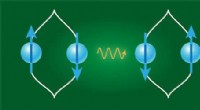
Spin refers to the intrinsic angular momentum of an electron, independent of its orbital motion. Electrons can have either "spin up" or "spin down" orientation. Spin is a fundamental property of electrons, similar to electric charge, and is also quantized. The spin of an electron is usually represented by an arrow pointing either up (↑) or down (↓). The spin of electrons plays a crucial role in various atomic and molecular phenomena, including the formation of electron pairs and the Pauli exclusion principle.
Comparison:
- Orbit describes the circular or elliptical paths of electrons around the nucleus, while spin refers to the intrinsic angular momentum of electrons.
- Orbit is determined by the electron's energy and the electrostatic attraction with the nucleus, whereas spin is a fundamental property independent of orbital motion.
- Orbit involves the spatial distribution of electrons, while spin relates to the intrinsic angular momentum and orientation of electrons.
- Orbit is crucial in understanding the electronic structure and chemical bonding of atoms, while spin is essential in explaining certain magnetic properties and spectroscopic phenomena.
In summary, orbit and spin are two key concepts in atomic physics, representing different aspects of electron motion. Orbit pertains to the electron's trajectory around the nucleus, determined by energy and electrostatic forces. On the other hand, spin signifies the intrinsic angular momentum of electrons, contributing to their magnetic behavior and influencing various atomic and molecular properties.