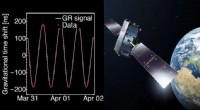
As the Moon moves closer to Earth during its perigee phase, its gravitational pull on Earth becomes stronger. This increased gravitational force can have several effects:
1. Tidal Variations: The stronger gravitational pull during perigee leads to higher tides on Earth. The gravitational forces from both the Moon and the Sun combine to create tides, and the increased lunar gravitational pull during perigee results in what are known as "spring tides." Spring tides are characterized by higher high tides and lower low tides compared to when the Moon is not at perigee.
2. Geophysical Effects: The increased gravitational force from the Moon during perigee can also affect the Earth's solid surface. This gravitational force can cause small deformations or "stresses" in the Earth's crust, leading to subtle changes in the shape and behavior of the land and ocean floor.
3. Ocean Currents and Sea Levels: The enhanced gravitational pull during perigee can influence ocean currents and sea levels. The increased lunar gravity can affect the circulation patterns of ocean currents and contribute to minor fluctuations in sea levels, particularly in coastal areas.
4. Impact on Celestial Mechanics: From an astronomical perspective, the gravitational pull exerted by the Moon during perigee can perturb the orbits of other celestial objects, such as satellites and asteroids that are in close proximity to the Earth-Moon system.
However, it's important to note that while the gravitational pull of the Moon varies during its orbit, these variations are relatively small and do not have significant or immediate consequences for life on Earth. The overall impact of perigee on Earth's gravitational pull is modest compared to the more dominant influence of the Sun's gravity and Earth's own rotation and gravitational field.