Examples of mass disappearing and converting to energy include:
1. Nuclear Reactions: In both nuclear fusion and fission, mass is lost when atomic nuclei combine or split. The difference in mass is converted into tremendous amounts of energy, as demonstrated in stars like the Sun and in nuclear power plants.
2. Pair Annihilation: When a particle and its antiparticle meet and annihilate each other, their masses are entirely converted into energy, typically in the form of high-energy photons or other particles.
3. Electron-Positron Collisions: When an electron and a positron collide at high speeds, they annihilate each other, transforming their masses into energy, usually resulting in the production of gamma rays.
4. Particle Decay: Certain unstable subatomic particles, such as the neutron, can undergo radioactive decay where a portion of their mass is transformed into energy and emitted in the form of other particles.
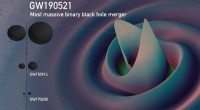
5. Black Hole Formation: As a star collapses and forms a black hole, a tremendous amount of gravitational energy is released, and a significant portion of the star's mass is converted into energy.
It's important to note that mass and energy are equivalent and interchangeable according to Einstein's theory of relativity, so when mass disappears, it doesn't truly vanish but rather transforms into a different form of energy.