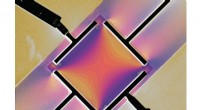
1. Transparent Solids: Certain solids, such as clear glass, crystals, and certain plastics, are transparent to light. This means that light can pass through these materials with minimal absorption or scattering, allowing us to see objects clearly through them. The transparency of a solid depends on its molecular structure and the arrangement of its atoms or molecules, which allows light waves to propagate through the material without significant interference.
2. Translucent Solids: Translucent solids allow some light to pass through them, but they scatter or diffuse the light rather than transmitting a clear image. This results in a hazy or frosted appearance. Examples of translucent solids include frosted glass, thin sheets of paper, and certain types of plastics. The scattering of light in translucent solids is often due to the presence of tiny particles, irregularities, or internal structures that disrupt the smooth passage of light waves.
3. Light Interaction at Surfaces: While solids are generally opaque, light can still interact with their surfaces in various ways. Reflection is the process by which light bounces off the surface of a solid object, such as a mirror or a glossy surface. Absorption occurs when light energy is absorbed by the solid material, converting it into other forms of energy such as heat. Scattering can also happen at the surface, causing light to be redirected in different directions.
4. Special Phenomena: In certain circumstances, light can travel through solids in unusual ways due to specific interactions with the material's structure or properties. For example, some solids exhibit the phenomenon of luminescence, where they emit light after absorbing energy from an external source. This is observed in materials such as fluorescent paints, phosphorescent materials, and certain minerals. Additionally, some solids can transmit light through tiny channels or pores, as in the case of photonic crystals or porous materials.
It's important to note that the ability of light to travel through solids depends on the specific properties of the material, its thickness, and the wavelength of the light. In most cases, solids are opaque to visible light, but they may interact with other forms of electromagnetic radiation, such as X-rays or microwaves, in different ways.