- When you walk, run, or drive, you are using the principles of motion, such as Newton's laws of motion, to move.
- The movement of objects around us, from the spinning of the Earth to the flight of an airplane, can be explained by physics.
2. Energy:
- When you use energy, such as turning on a light or charging a phone, you are using the principles of energy, such as conservation of energy, to convert one form of energy into another.
- Energy is essential for all life on Earth and the way we use and transform it is a fundamental aspect of physics.
3. Heat and Thermodynamics:
- When you cook food, you are using the principles of heat and thermodynamics to transfer energy to the food and change its temperature.
- Understanding heat transfer and the behavior of thermal systems is crucial in various fields, including engineering and meteorology.
4. Light and Optics:
- When you see an object, you are using the principles of light and optics to detect and process the light reflected or emitted by the object.
- Optics plays a vital role in technologies like eyeglasses, cameras, and fiber optic communication.
5. Sound and Acoustics:
- When you hear music, you are using the principles of sound and acoustics to perceive and interpret the vibrations in the air.
- Understanding acoustics is important in areas such as music, noise control, and architectural design.
6. Electricity and Magnetism:
- When you use a device like a smartphone or plug in a charger, you are using the principles of electricity and magnetism to generate, transmit, and utilize electrical energy.
- Electromagnetic phenomena form the basis of many technologies, including motors, generators, and wireless communication.
7. Atomic and Nuclear Physics:
- When you use nuclear energy or go through medical imaging procedures like X-rays or MRI scans, you are encountering the principles of atomic and nuclear physics.
- Understanding the behavior of atoms and subatomic particles has significant implications for fields such as nuclear power, radiation therapy, and particle physics.
8. Fluids and Fluid Mechanics:
- When you pour water into a glass or watch waves at the beach, you are observing the principles of fluids and fluid mechanics.
- Fluid mechanics is essential in engineering, environmental studies, and various industries that deal with the flow and behavior of fluids.
9. Astrophysics and Cosmology:
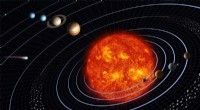
- When you look up at the stars or wonder about the origins of the universe, you are exploring the realm of astrophysics and cosmology.
- These fields study the vast universe and its phenomena, providing insights into the properties and behavior of celestial objects and the fundamental nature of the cosmos.