1. Absorption: Photons can be absorbed by atoms or molecules in the matter. When this happens, the energy of the photons is transferred to the matter, causing it to become excited or ionized. The absorption of photons is what gives objects their color. For example, a red object appears red because it absorbs all other colors of light except red, which it reflects.
2. Reflection: When photons strike a surface, they can be reflected, meaning they bounce off the surface and change their direction of travel. Reflection occurs when the photons interact with the electrons on the surface of the material. The angle at which the photons are reflected depends on the angle at which they hit the surface and the properties of the material.
3. Refraction: When photons pass from one medium to another, such as from air to glass or from water to air, they can be refracted, meaning their direction of travel changes. Refraction occurs because the speed of light is different in different media. The angle at which the photons are refracted depends on the angle at which they hit the interface between the two media and the refractive indices of the media.
4. Scattering: Photons can also be scattered when they pass through matter. Scattering occurs when the photons interact with particles in the matter, such as atoms, molecules, or dust particles. The scattering of photons can cause light to be diffused or spread out, resulting in effects such as fog, haze, or milkiness.
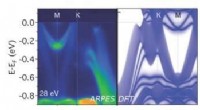
5. Photoelectric effect: When photons with sufficient energy strike certain materials, they can cause electrons to be emitted from the material. This phenomenon is called the photoelectric effect. The threshold energy required for the photoelectric effect depends on the material.
It's important to note that the interactions of photons with matter depend on the wavelength and energy of the photons, as well as the properties of the matter. For example, high-energy photons, such as X-rays and gamma rays, can penetrate matter more deeply than low-energy photons, such as visible light.