Transverse Waves:
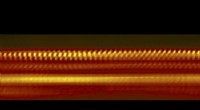
- Direction of Particle Vibration: In transverse waves, particles of the medium vibrate perpendicular to the direction of the wave's propagation. Imagine moving your hand up and down while holding one end of a rope fixed. The wave travels along the rope, but the rope particles move up and down.
- Compressions and Rarefactions: Transverse waves do not involve compression and rarefaction of the medium. Instead, they create fluctuations in the medium's displacement perpendicular to the wave's propagation direction.
- Examples: Transverse waves include electromagnetic waves (such as light and radio waves), waves on a string, and water waves (ripples on the surface of water).
Longitudinal Waves:
- Direction of Particle Vibration: In longitudinal waves, particles of the medium vibrate parallel to the direction of the wave's propagation. For instance, imagine pushing one end of a slinky back and forth. The wave moves forward, but the slinky's coils compress and expand in the same direction as the wave's propagation.
- Compressions and Rarefactions: Longitudinal waves create regions of compression (where particles are closer together) and rarefaction (where particles are farther apart). These compressions and rarefactions travel through the medium.
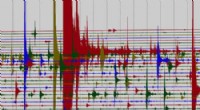
- Examples: Longitudinal waves include sound waves (compressions and rarefactions of air), seismic waves (such as P-waves that cause ground particles to move back and forth in the same direction as the wave's propagation), and vibrations in solids.
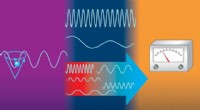
In summary, the primary difference lies in the direction of particle vibration. In transverse waves, particles move perpendicular to the wave's propagation, while in longitudinal waves, particles move parallel to the wave's propagation. This fundamental distinction affects the formation of waves and how energy is transferred through different media.