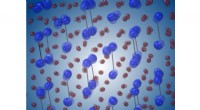
1. Medium: The speed of a wave depends on the properties of the medium through which it travels. For example, sound waves travel faster through solids than through liquids or gases, and light waves travel faster through a vacuum than through any other medium.
2. Temperature: In general, the speed of a wave increases with increasing temperature. This is because higher temperatures cause the particles in a medium to move faster, which allows the wave to propagate more quickly. For example, sound waves travel faster in warmer air or water.
3. Density: The speed of a wave is inversely proportional to the density of the medium. This means that the denser the medium, the slower the wave travels. For example, sound waves travel slower in denser air or water.
4. Elasticity: The elasticity of a medium also affects the speed of a wave. The more elastic a medium, the faster the wave travels. This is because elasticity allows the particles in a medium to store and release energy quickly, which helps to propagate the wave. For example, sound waves travel faster in elastic solids than in viscoelastic solids.
5. Frequency: In some cases, the speed of a wave can also depend on its frequency. For example, in the case of electromagnetic waves, the speed of light is constant in a vacuum, but it can vary in certain materials depending on the frequency of the light. This phenomenon is known as dispersion.
These are some of the main factors that can affect the speed of a wave.