Here's a detailed explanation of what happens when a vibrating object causes a second object to vibrate:
1. Transfer of Energy: As the vibrating object moves back and forth, it creates disturbances in the surrounding medium, such as air or water. These disturbances are in the form of waves that travel through the medium. As these waves reach the second object, they transfer energy to it.
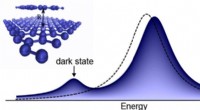
2. Matching Natural Frequencies: Every object has a natural frequency at which it vibrates most easily. This frequency depends on the object's physical properties, such as mass and elasticity. If the frequency of the vibrating object matches the natural frequency of the second object, the energy transfer becomes efficient, and resonance occurs.
3. Amplification of Vibrations: At resonance, the second object's vibrations are amplified, meaning their amplitude increases significantly. This is because the energy transferred from the vibrating object is continuously reinforcing the vibrations of the second object, causing it to vibrate with larger amplitude.
4. Sympathetic Vibrations: The phenomenon of resonance is often referred to as sympathetic vibrations. This is because the second object seems to "sympathize" with the vibrating object and starts vibrating in harmony with it.
5. Resonance in Various Contexts: Resonance can be observed in various areas, including music, engineering, and physics. For example:
- In music, when a singer's voice matches the natural frequency of a wine glass, the glass starts to vibrate and produce sound, enhancing the singer's voice.
- In engineering, resonance can cause bridges or buildings to vibrate excessively under certain conditions, potentially leading to structural damage.
- In physics, resonance is utilized in experiments involving sound waves, such as the resonance of a tuning fork or the vibration of guitar strings.
In summary, resonance occurs when a vibrating object transfers energy to a second object, causing the second object to vibrate with maximum amplitude. This phenomenon happens when the frequency of the vibrating object matches the natural frequency of the second object, leading to sympathetic vibrations and significant amplification of vibrations.