- Braking is the process of slowing down or stopping a moving vehicle.
- Friction is the force that opposes the relative motion or tendency to move of two surfaces in contact.
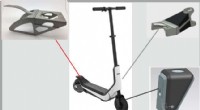
- In the case of brakes, friction is created between the brake pads and the brake disc or rotor (in cars), or between the brake pads and the wheel rim (in bicycles).
- When the driver presses the brake pedal, the brake pads are forced against the disc or rotor, generating friction that converts kinetic energy (the energy of motion) into thermal energy (heat). This heat is then dissipated into the surrounding air.
- The greater the friction, the greater the braking force and the more quickly the vehicle will slow down or stop.