Mathematically, the gravitational force (F) between two objects with masses m1 and m2, separated by a distance r, is given by the formula:
```
F = Gm1m2 / r^2
```
Here, G is the gravitational constant, which has a value of approximately 6.674 × 10^-11 N·m²/kg². The gravitational force is always attractive, meaning it pulls objects towards each other. The greater the masses of the objects and the smaller the distance between them, the stronger the gravitational force between them.
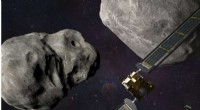
Gravitational force is responsible for holding planets in orbit around the Sun, keeping the Moon in orbit around Earth, and many other phenomena in the universe. It is one of the fundamental forces in nature, along with electromagnetic force, strong nuclear force, and weak nuclear force.