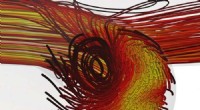
Lift is created by the shape of the wings and the angle at which they are positioned. The wings are curved so that the air flowing over the top of the wing travels faster than the air flowing over the bottom of the wing. This creates a region of lower air pressure above the wing than below it, which results in an upward lift force.
The angle at which the wings are positioned, known as the angle of attack, also affects the lift force. As the angle of attack increases, the lift force increases until it reaches a maximum value. However, if the angle of attack becomes too great, the airflow over the wings becomes turbulent and the lift force decreases. This condition is known as a stall.
The amount of lift force required to keep an aircraft in the air depends on the weight of the aircraft and its speed. The heavier the aircraft, the more lift force it needs. The faster the aircraft is flying, the less lift force it needs.
Lift force is one of the four fundamental forces of flight, along with thrust, weight, and drag. In order for an aircraft to fly, the lift force must be greater than the weight of the aircraft.