1. Reflection: A portion of the light waves is reflected back into the air, giving rise to the mirror-like reflection we see on calm water surfaces. The angle of reflection is equal to the angle of incidence, meaning the reflected light wave bounces off the water at the same angle it hit the surface.
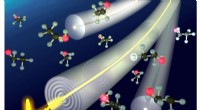
2. Refraction: Another portion of the light waves undergoes refraction, which means they are bent as they enter the water. This is because the speed of light is slower in water than in air. The amount of refraction depends on the wavelength of light and the angle of incidence. Shorter wavelengths, such as blue light, are refracted more than longer wavelengths, such as red light. This is why underwater objects appear slightly reddish compared to their actual colors.
3. Absorption: Some of the light waves are absorbed by water molecules. The absorption of light depends on the wavelength and the properties of the water. Pure water absorbs very little visible light, but it absorbs ultraviolet (UV) light strongly. As a result, UV radiation from the sun is significantly reduced as it penetrates into the water, which is important for protecting aquatic life.
4. Scattering: Light waves can also be scattered by particles suspended in the water, such as sediment, plankton, or pollutants. This scattering causes the water to appear cloudy or murky. The scattering effect is more pronounced for shorter wavelengths, which is why the water often looks bluish or greenish.
5. Total Internal Reflection: When light traveling in water hits the water-air interface at a sufficiently shallow angle, it can undergo total internal reflection. This means the light is entirely reflected back into the water, and none of it is transmitted into the air. This phenomenon is essential for fiber optics, where light is guided through long, thin glass or plastic fibers by multiple total internal reflections.
The interplay of these phenomena determines how light interacts with water, affecting the appearance of water bodies and the underwater environment.