1. Transverse Waves:
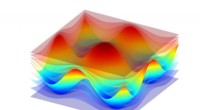
- Transverse waves, such as electromagnetic waves (light), water waves, and seismic shear waves, have a direction of oscillation perpendicular to the direction of wave propagation. In other words, the particles of the medium oscillate up and down, left and right, or back and forth, while the wave itself moves forward.
2. Longitudinal Waves:
- Longitudinal waves, such as sound waves and seismic compressional waves, have a direction of oscillation parallel to the direction of wave propagation. The particles of the medium move back and forth along the same line as the wave's movement.
3. Surface Waves:
- Surface waves, like ocean waves and Love waves in seismic waves, are confined to the boundary or interface between two different media. The direction of propagation of surface waves is typically along the interface, while the particles of the medium move in an elliptical or circular motion.
4. Spherical Waves:
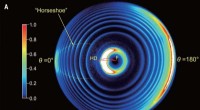
- Spherical waves are emitted from a point source and propagate outward in all directions. The energy spreads uniformly in the form of concentric spheres. Each particle of the medium oscillates radially away from or towards the source.
5. Plane Waves:
- Plane waves are idealized waves with a constant amplitude and wavefronts that are parallel planes. They propagate in a single direction perpendicular to the wavefronts.
In general, the direction of wave propagation is determined by the properties of the medium, the nature of the disturbance, and the boundary conditions if applicable.