Fundamental forces:
1. Nature: Fundamental forces are essential interactions that exist between all matter and energy in the universe. They play a pivotal role in shaping the structure and dynamics of the physical world.
2. Types: There are four fundamental forces recognized in physics: gravitational force, electromagnetic force, strong nuclear force, and weak nuclear force.
- Gravitational force: It is the most familiar force that attracts objects with mass towards each other, holding the universe together.
- Electromagnetic force: This force governs interactions between electrically charged particles, like protons and electrons, responsible for chemical bonding, electric currents, and phenomena such as repulsion and attraction of magnets.
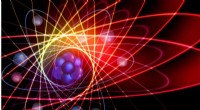
- Strong nuclear force: The strong nuclear force acts within atomic nuclei, holding protons and neutrons together while overcoming the electrostatic repulsion between positively charged protons. It only manifests over extremely short distances.
- Weak nuclear force: The weak nuclear force is involved in specific radioactive decay processes like beta decay and neutrino interactions. Unlike the other forces, it has a limited range and weak strength.
Non-forces:
1. Nature: Non-forces, also known as pseudo-forces or inertial forces, are not genuine fundamental forces in the sense that they do not result from an exchange of particles or mediating fields. They arise due to a change in a reference frame or acceleration.
2. Examples: There are two common examples of non-forces:
- Centrifugal force: When an object rotates, an outward force seems to push it away from the center of rotation. This centrifugal effect is not an actual force but an apparent force experienced by an observer in a rotating frame of reference.
- Coriolis force: When an object moves in a rotating reference frame (like Earth), it appears to deviate from its straight path due to the Coriolis force. Like centrifugal force, it's a pseudo-force caused by Earth's rotation.
Summary:
Fundamental forces describe real interactions between particles or entities within the framework of physics theories, whereas non-forces are apparent forces that arise from the perspective of an accelerating observer or a non-inertial reference frame. While both concepts hold significance in different contexts, non-forces do not represent independent fundamental interactions in the same manner as gravitational, electromagnetic, strong, and weak forces.