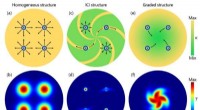
In general, waves diffract when they encounter any form of obstruction or disturbance in their path. Examples include:
1. Obstruction: When a wave encounters an object that partially blocks its path, such as a small gap, it diffracts around the edges of the object, resulting in a spreading out of the wave beyond the obstruction.
2. Aperture: When a wave passes through a small opening or aperture, it diffracts, causing the wave to spread out after passing through the aperture. The smaller the aperture, the greater the diffraction.
3. Edges: When a wave encounters a sharp edge or boundary, it diffracts, creating interference patterns and causing the wave to spread out.
4. Slits: When light passes through multiple slits, it diffracts, creating an interference pattern on the screen. The spacing between the slits determines the pattern observed.
The extent of diffraction depends on the wavelength of the wave relative to the size of the obstacle or aperture. Shorter wavelengths, such as those associated with visible light, diffract less compared to longer wavelengths like radio waves.
Diffraction is a crucial phenomenon in various fields of science and engineering, including optics, acoustics, radio communication, and imaging techniques like X-ray crystallography. It plays a significant role in understanding the behavior of light, sound, and other wave phenomena.