1. Pitot Tube:
- A Pitot tube measures the velocity of a fluid by sensing the difference between the total pressure (stagnation pressure) and static pressure.
- It consists of a tube with one opening pointing directly into the flow and another perpendicular to it. The difference in pressure between these openings can be used to calculate the velocity.
2. Anemometer:
- An anemometer is a device that measures the velocity of a moving gas.
- It uses rotating cups or propellers to sense the flow velocity. The rotation speed of the cups or propellers is proportional to the velocity of the gas.
3. Hot-wire Anemometer:
- A hot-wire anemometer uses a heated wire to measure the velocity of a gas.
- When gas flows over the heated wire, it cools it, changing the electrical resistance of the wire. This change in resistance can be correlated to the velocity of the gas.
4. Laser Doppler Velocimetry (LDV):
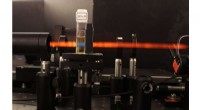
- LDV is a non-intrusive optical technique that uses the Doppler effect to measure velocity.
- It works by emitting laser light and measuring the frequency shift of the reflected light from particles or seeding particles in the flow. The frequency shift is proportional to the velocity of the particles and, thus, the fluid.
5. Particle Image Velocimetry (PIV):
- PIV is another optical technique that uses images to measure fluid velocity.
- It involves illuminating the flow with a laser sheet and capturing images of particles or tracers in the flow. The displacement of the particles between consecutive images is used to calculate the velocity.
The choice of velocity measurement technique depends on factors such as the fluid velocity range, duct size, accuracy requirements, and environmental conditions.