1. Fermi National Accelerator Laboratory (Fermilab):
* Type of Accelerator: Proton accelerator
* Experiments: Fermilab is known for its high-energy physics experiments, including the search for new particles, studies of the Higgs boson, and investigations into the nature of dark matter and dark energy. It hosts experiments like the Large Hadron Collider (LHC) at CERN through international collaborations.
2. Brookhaven National Laboratory (BNL):
* Type of Accelerator: Relativistic Heavy Ion Collider (RHIC) and National Synchrotron Light Source II (NSLS-II)
* Experiments: BNL's RHIC is the world's only polarized proton collider. It's used to study the properties of hot and dense matter that existed shortly after the Big Bang. The NSLS-II is a synchrotron light source that provides intense beams of X-rays for materials research, drug development, and imaging experiments.
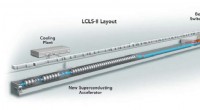
3. SLAC National Accelerator Laboratory (SLAC):
* Type of Accelerator: Linear accelerator and synchrotron light source
* Experiments: SLAC is known for its high-energy physics research and its use of synchrotron radiation. It houses the Stanford Linear Accelerator Center (SLAC) accelerator, which is used to study the properties of elementary particles like electrons and quarks. SLAC also has facilities for studying materials and chemical processes using synchrotron light.