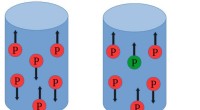
Buoyancy: Buoyancy refers to the upward force exerted by a fluid that opposes the weight of an immersed object. It is generated due to the pressure differences between the top and bottom surfaces of the object.
Relative Densities: The density of an object is defined as its mass per unit volume. When comparing the density of an object to that of the fluid, we obtain the relative density.
Object Floats:
An object will float if its average density is less than that of the fluid.
When the object is placed in the fluid, the buoyant force acting upward counteracts the downward gravitational force due to its mass.
As long as the buoyant force is greater than or equal to the weight of the object, it will remain suspended in the fluid without sinking.
Object Sinks:
An object will sink if its average density is greater than that of the fluid.
In this case, the downward gravitational force exceeds the buoyant force acting upward.
The net force on the object is directed downward, causing it to sink until it reaches the bottom or displaces an equal amount of the fluid to balance the forces.
Examples:
A boat made of materials like wood or fiberglass can float on water because its average density is lower than that of water. The air trapped inside the boat contributes to its overall buoyancy.
A metal object like a coin sinks in water because its density is higher than that of water. The force of gravity acting on the coin is greater than the buoyant force exerted by the water.
Ships can navigate on water even though they are made of materials denser than water because of their shape and compartments that trap air. These air pockets reduce the average density of the ship, allowing it to float.
In summary, while mass is a vital property, it is the interplay of mass, volume, and the fluid's density that ultimately determines whether an object floats or sinks. By considering relative densities and buoyancy, we can accurately predict and explain the behavior of objects in various fluids.