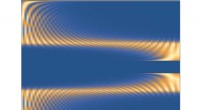
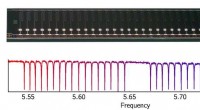
The Doppler effect is caused by the fact that sound waves are mechanical waves, meaning that they require a medium to travel through. As an object moves through a medium, it creates disturbances in the medium that cause sound waves to be emitted. The frequency of the sound waves is determined by the wavelength of the waves, which is the distance between two successive peaks or troughs of the waves. As an object moves away from an observer, the wavelength of the sound waves increases, which causes the frequency of the sound to decrease.
The Doppler effect is also responsible for the change in pitch of a sound as an object moves towards or away from an observer. When an object is moving towards an observer, the sound waves are compressed, which causes the frequency of the sound to increase. Conversely, when an object is moving away from an observer, the sound waves are stretched out, which causes the frequency of the sound to decrease.