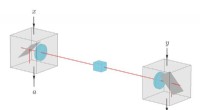
C4H10 is a nonpolar molecule, meaning it does not have a significant permanent dipole moment. As a result, it lacks strong intermolecular forces such as hydrogen bonding or dipole-dipole interactions. However, all molecules, including nonpolar ones, experience London dispersion forces.
London dispersion forces arise from the instantaneous and temporary fluctuations in the electron cloud of a molecule. These fluctuations create transient dipoles, which can then induce dipoles in neighboring molecules. The attraction between these induced dipoles is what gives rise to London dispersion forces.
In C4H10, the London dispersion forces are the only significant intermolecular forces present. These forces are relatively weak compared to hydrogen bonding or dipole-dipole interactions, but they still play an important role in determining the physical properties of C4H10, such as its boiling point and melting point.