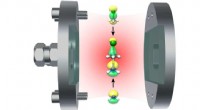
Dipole-dipole forces are strongest when the molecules are close together and the partial charges are aligned. This means that dipole-dipole forces are strongest in liquids and solids. They are weaker in gases because the molecules are farther apart and the partial charges are not as well aligned.
Some examples of situations where dipole-dipole forces would be significant include:
* The attraction between water molecules in liquid water.
* The attraction between ethanol molecules in liquid ethanol.
* The attraction between acetone molecules in liquid acetone.
* The attraction between chloroform molecules in liquid chloroform.
Dipole-dipole forces are also important in the interactions between biological molecules. For example, dipole-dipole forces help to stabilize the structure of proteins and nucleic acids. They also play a role in the interactions between drugs and receptors.