1.Fluidity: Air can move and flow freely. When you open a window, air rushes in or out to equalize the pressure difference.
2.Continuous Medium: Like liquids, air is a continuous medium. It means that it can transmit pressure equally in all directions. When you blow air into a balloon, the pressure inside increases uniformly, causing the balloon to expand.
3.Density and Compressibility: Air has mass and occupies space, indicating that it has density. Air is compressible, meaning that its density can change when subjected to pressure. For instance, air inside a bicycle tire is compressed to a higher density than the air outside.
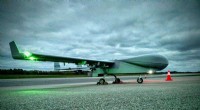
4.Bernoulli's Principle: Air's fluid-like behavior can be explained by Bernoulli's principle. As the speed of air increases, its pressure decreases. This phenomenon can be observed in the lift generated by an airplane's wings or the flight of a kite.
5.Laminar and Turbulent Flow: Just like liquids, air can exhibit laminar (smooth, orderly flow) or turbulent flow (irregular, chaotic flow). When air moves slowly and smoothly, it follows a laminar pattern. However, when the velocity increases, the flow becomes turbulent.
6.Viscosity: Although to a much lesser extent than liquids, air also has viscosity, which is the resistance to flow. This property is responsible for the drag experienced by objects moving through the air, such as a car or a parachute.
7.Surface Tension: Air, like other fluids, exhibits a minimal amount of surface tension. While this effect is more pronounced in liquids, it still plays a role in the formation of small bubbles or droplets in the air, like soap bubbles or mist.
In summary, air behaves like a fluid due to its ability to flow, exert pressure, and exhibit properties such as density, compressibility, and viscosity. These characteristics allow air to be manipulated, used in various applications, and studied within the field of fluid dynamics.