1. Orbital Shape:
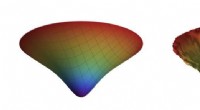
The second quantum number (l) determines the shape of the electron's orbital. Each value of l corresponds to a specific orbital shape:
- l = 0: s orbital (spherical shape)
- l = 1: p orbital (three dumbbell-shaped orbitals oriented along the x, y, and z axes)
- l = 2: d orbital (five complex orbitals with different shapes, including cloverleaf and dumbbell shapes)
- l = 3: f orbital (seven even more complex orbitals)
2. Subshells:
Electrons with the same principal quantum number (n) and the same l value are said to belong to the same subshell. For example, within the n = 2 energy level, the l = 0 subshell corresponds to the 2s orbital, while the l = 1 subshell corresponds to the three 2p orbitals (2px, 2py, 2pz).
3. Energy Sublevels:
The second quantum number also influences the electron's energy within a subshell. Electrons with higher l values (higher angular momentum) generally have higher energy levels within the same subshell. This means that, for instance, the 2p orbitals have slightly higher energy than the 2s orbital in the n = 2 energy level.
4. Electron Capacity:
The maximum number of electrons that can occupy a subshell is determined by the second quantum number. The formula 2(2l + 1) gives the maximum number of electrons for a given l value:
- l = 0: s subshell can hold a maximum of 2 electrons (2(2(0) + 1) = 2)
- l = 1: p subshell can hold a maximum of 6 electrons (2(2(1) + 1) = 6)
- l = 2: d subshell can hold a maximum of 10 electrons (2(2(2) + 1) = 10)
In summary, the second quantum number (l) describes the shape of electron orbitals, determines subshells, influences electron energy levels within subshells, and specifies the maximum number of electrons that can occupy each subshell. Understanding the second quantum number helps visualize electron distributions, explain atomic structures, and predict electron behavior in various atoms and molecules.