The new study, published in the journal Nature, used a quantum simulator to create a system of artificial monopoles. These monopoles were then observed to decay in a manner that is consistent with the predicted behavior. This provides strong evidence for the theory that monopoles decay by emitting pairs of particles called dyons.
The discovery is a significant step forward in our understanding of monopoles and could have implications for our understanding of other fundamental particles, such as quarks and gluons. It also opens up new possibilities for exploring the properties of matter at very high temperatures and densities, where monopoles are thought to have existed in the early universe.
The theory of monopole decay was first proposed by Gerard 't Hooft and Alexander Polyakov in 1974. They argued that monopoles could decay by emitting pairs of dyons, which are particles that carry both magnetic and electric charges.
The decay process can be visualized as follows:
- A monopole emits a virtual dyon pair, which consists of a dyon with positive magnetic charge and a dyon with negative magnetic charge.
- The dyon pair then separates and moves away from the monopole.
- The positive dyon and negative dyon eventually annihilate each other, releasing energy in the form of photons.
The rate at which monopoles decay depends on their mass and the strength of the magnetic field in which they are located. Heavier monopoles decay more slowly than lighter monopoles, and monopoles in stronger magnetic fields decay more slowly than monopoles in weaker magnetic fields.
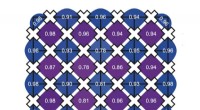
The new study used a quantum simulator to create a system of artificial monopoles. The quantum simulator was a cold atomic gas trapped in a magnetic field. The atoms in the gas were used to represent the monopoles, and the magnetic field was used to control the strength of the magnetic interactions between the monopoles.
The researchers observed the decay of the artificial monopoles by measuring the number of dyons that were emitted. They found that the decay rate was consistent with the predicted behavior of the 't Hooft-Polyakov theory. This provides strong evidence for the theory that monopoles decay by emitting pairs of dyons.
The discovery of monopole decay has several implications for our understanding of fundamental physics:
- It provides experimental verification for a decades-old theory, which supports the idea that monopoles exist.
- It opens up new possibilities for exploring the properties of matter at very high temperatures and densities, where monopoles are thought to have existed in the early universe.
- It could have implications for our understanding of other fundamental particles, such as quarks and gluons.
The discovery is a significant step forward in our understanding of monopoles and could lead to new insights into the fundamental nature of matter and the universe.