Mesons and Their Disappearance:
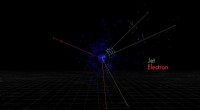
Mesons are composed of a quark and an antiquark bound together by the strong force. In the context of RHIC experiments, mesons are created in abundance when heavy ions, such as gold nuclei, collide at extremely high energies. However, these mesons have a very short lifespan and quickly disappear.
The puzzle lies in understanding why these mesons disappear and what causes their rapid demise. To address this question, scientists at RHIC conducted a series of experiments focusing on the behavior of mesons in these high-energy collisions.
Key Findings:
* Regeneration and Annihilation: The RHIC measurements revealed a novel mechanism by which mesons disappear. Mesons can transform into baryons, particles made up of three quarks, and subsequently, these baryons can recombine to form new mesons. This process of regeneration and annihilation, also known as meson-baryon conversion, sheds light on the dynamics of these subatomic interactions at high energies.
* Quark Recombination: The experiments provided evidence for quark recombination, a process where quarks from different mesons and baryons can combine to form new particles. This quark recombination process explains the regeneration of mesons and their eventual transformation into other hadrons.
These findings enhance our understanding of how mesons behave under extreme conditions, paving the way for deeper insights into the nature of strong nuclear interactions and the complex interplay of quarks and gluons. They also offer experimental validation for theoretical models describing these high-energy processes, leading to progress in the field of quantum chromodynamics (QCD), the theory that governs strong nuclear interactions.
In summary, high-energy collision experiments at RHIC have provided valuable measurements that unravel the mystery behind the disappearance of mesons. By observing regeneration and quark recombination processes, scientists gain a better grasp of the fundamental dynamics of subatomic particles under extreme conditions. These findings represent significant advancements in our understanding of strong nuclear interactions and open avenues for further exploration in theoretical and experimental particle physics.