Topological Materials: Topological materials, characterized by their topological properties that are robust against external perturbations, have garnered significant attention. These materials exhibit exotic phenomena, such as the quantum spin Hall effect and Majorana fermions, which could lead to next-generation spintronic devices and fault-tolerant quantum computing.
Quantum Spin Liquids: Quantum spin liquids are materials in which magnetic moments behave collectively as a quantum liquid, without forming conventional long-range magnetic order. This behavior opens avenues for unconventional magnetic memory and data storage devices, as well as potentially realizing quantum spin-based qubits for quantum computing.
Superconductors: Superconductors, materials that conduct electricity with no resistance at extremely low temperatures, are being actively studied for their potential in energy-efficient power transmission, electric motors, and superconducting electronics. Ongoing research focuses on discovering new superconductors with higher transition temperatures and exploring unconventional superconductors for applications in quantum computing.
Quantum Sensors and Metrology: Quantum materials hold promise for developing ultra-sensitive sensors and metrology instruments. Their unique quantum properties can enhance precision measurements, enabling advancements in fields such as medical imaging, navigation, and materials characterization.
Quantum Photonics and Optoelectronics: Quantum materials can manipulate light at the quantum level, enabling the development of quantum light sources, detectors, and nonlinear optical devices. These advancements have implications for secure communication, quantum cryptography, and quantum computing.
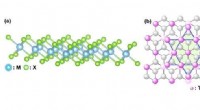
2D Materials: Two-dimensional (2D) materials, such as graphene and transition metal dichalcogenides, have captivated researchers due to their remarkable electronic, optical, and mechanical properties. These materials could revolutionize electronics, catalysis, energy storage, and nanoelectronics.
Quantum Computing and Quantum Information Processing: Quantum materials are essential components for realizing practical quantum computers and quantum information processing systems. Their ability to host and control quantum states is crucial for developing scalable quantum bits (qubits) and quantum algorithms.
Integration and Fabrication: As the field of quantum materials advances, challenges related to integration, fabrication, and scalability become increasingly important. Developing techniques for precisely manipulating and combining different quantum materials will be vital for realizing functional quantum devices.
Interdisciplinary Collaborations: Progress in the realm of quantum materials heavily relies on interdisciplinary collaborations between physicists, chemists, material scientists, and engineers. Synergistic efforts are necessary to bridge the gap between fundamental research and practical applications.
Overall, the future of quantum materials is incredibly promising, with the potential to reshape various technological domains. By harnessing and understanding the unique quantum properties of these materials, we can pave the way for groundbreaking advancements in computing, energy, sensing, and communication technologies. As research continues to unravel the mysteries of quantum materials, we can expect transformative innovations that will shape the world in unforeseen ways.