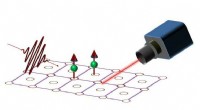
SPM works by scanning a sharp tip across the surface of a material. As the tip moves, it interacts with the atoms and molecules on the surface, causing them to vibrate. The vibrations are detected by the tip, which is then used to create an image of the surface.
The researchers used SPM to image the surface of a metal alloy that had been subjected to mechanical stress. They found that the stress had caused the atoms in the alloy to rearrange themselves, forming tiny cracks and defects. These cracks and defects can eventually lead to the failure of the material.
The researchers say that SPM can be used to study a wide variety of materials, including metals, ceramics, polymers, and biological materials. The technique could be used to develop new materials that are more resistant to mechanical damage, and to improve the performance of existing materials.
"SPM is a powerful new tool that allows us to see how mechanical damage begins at the molecular scale," said Argonne materials scientist Dr. Amitesh Paul, who led the research team. "This information can be used to develop new materials that are more resistant to damage, and to improve the performance of existing materials."
The research team's findings were published in the journal Nature Communications.
Funding for the research was provided by the DOE's Office of Science and the National Science Foundation.