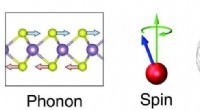
Sound is a mechanical wave that propagates through matter. It can be described as a vibration of particles in a medium. When sound waves are split, they can create two new waves that are out of phase with each other. This phenomenon is called quantum superposition.
Quantum superposition is a fundamental principle of quantum mechanics. It states that a quantum system can exist in multiple states at the same time. This is different from classical physics, where objects can only exist in one state at a time.
Quantum superposition is what makes quantum computers so powerful. It allows them to perform calculations that are impossible for classical computers. For example, a quantum computer could factor a large number in polynomial time, while a classical computer would take exponential time.
Splitting sound is one way to create quantum superposition. Another way is to use photons, which are particles of light. When photons are split, they can create two new photons that are out of phase with each other.
Scientists are studying how to use quantum superposition to build new kinds of quantum computers. These computers could be much faster and more powerful than classical computers. They could be used to solve a variety of problems, including finding new drugs, designing new materials, and simulating complex systems.
The development of quantum computers is still in its early stages, but it has the potential to revolutionize many fields. Quantum computers could lead to new discoveries in science, medicine, and engineering. They could also make it possible to solve problems that are currently impossible for classical computers.
Here is a more detailed explanation of how splitting sound might lead to a new kind of quantum computer:
When sound waves are split, they can create two new waves that are out of phase with each other. This phenomenon is called quantum superposition. Quantum superposition is a fundamental principle of quantum mechanics. It states that a quantum system can exist in multiple states at the same time. This is different from classical physics, where objects can only exist in one state at a time.
Quantum superposition is what makes quantum computers so powerful. It allows them to perform calculations that are impossible for classical computers. For example, a quantum computer could factor a large number in polynomial time, while a classical computer would take exponential time.
Splitting sound is one way to create quantum superposition. Another way is to use photons, which are particles of light. When photons are split, they can create two new photons that are out of phase with each other.
Scientists are studying how to use quantum superposition to build new kinds of quantum computers. These computers could be much faster and more powerful than classical computers. They could be used to solve a variety of problems, including finding new drugs, designing new materials, and simulating complex systems.
The development of quantum computers is still in its early stages, but it has the potential to revolutionize many fields. Quantum computers could lead to new discoveries in science, medicine, and engineering. They could also make it possible to solve problems that are currently impossible for classical computers.