One approach to measuring the tunneling time involves observing the interference between two quantum states, one of which experiences tunneling and the other acts as a reference. This concept is often realized through experiments known as "quantum tunneling delay experiments" or "quantum interference experiments."
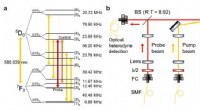
In these experiments, a beam of particles, such as electrons or photons, is split into two paths, creating a coherent superposition of states. One path includes a barrier that the particles can tunnel through, while the other path serves as a reference without a barrier. The two beams are then recombined, and the interference pattern formed contains information about the phase difference between the tunneling and non-tunneling components.
By carefully measuring the interference pattern, it becomes possible to infer information about the time delay introduced by the tunneling process. This time delay can be attributed to the finite time it takes for the particle to pass through the barrier, providing insights into the transient dynamics of quantum tunneling.
However, measuring the tunneling time is highly challenging due to decoherence effects. Decoherence is the loss of quantum coherence caused by interactions with the environment, which can blur out the interference pattern and obscure the precise timing information. To mitigate this issue, experiments are conducted in carefully controlled environments with low levels of noise and decoherence.
Another experimental technique for probing tunneling time involves attosecond spectroscopy, where extremely short pulses of light in the attosecond range (1 attosecond = 10^-18 seconds) are used to capture the ultrafast dynamics of tunneling. By manipulating and observing the temporal evolution of quantum tunneling, scientists aim to uncover the time scales associated with this process.
In conclusion, measuring the precise duration of quantum tunneling remains a complex task due to the challenges of observing and distinguishing the transient behavior of particles during the tunneling process. Quantum interference experiments and attosecond spectroscopy are among the techniques employed to gain insights into the timing of quantum tunneling, providing valuable information for advancing our understanding of quantum mechanics.