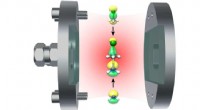
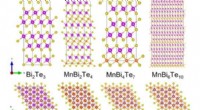
In the realm of quantum materials, where exotic properties emerge from the interplay of quantum mechanics and material structure, cerium-copper-silicon (CeCu2Si2) stands out as an enigmatic entity, challenging our conventional understanding of superconductivity. This material has sparked intense scientific curiosity due to its peculiar behavior that straddles the boundary between superconductivity and magnetism, blurring the lines that define these states of matter.
Superconductivity 101
Superconductivity is a remarkable state characterized by the complete absence of electrical resistance and the expulsion of magnetic fields from the material's interior. This phenomenon occurs at extremely low temperatures and has revolutionary implications for various technologies, including energy-efficient power transmission and advanced medical imaging.
The Puzzling Case of CeCu2Si2
Cerium-copper-silicon initially appeared to be a promising candidate for superconductivity. When cooled to temperatures close to absolute zero (-273.15 degrees Celsius), it exhibits a significant drop in electrical resistance, suggesting the onset of superconductivity. However, subsequent experiments revealed that the material's magnetic properties also undergo a transformation at similar temperatures, complicating the interpretation of its behavior.
Magnetic Impurities: A Twist in the Tale
Further investigations revealed the presence of tiny magnetic impurities within CeCu2Si2, which seemed to be responsible for the observed drop in electrical resistance. These impurities, acting as "quantum scatterers," disrupt the smooth flow of electrons, creating the illusion of superconductivity. This phenomenon, known as the "proximity effect," arises when non-superconducting materials are placed in close proximity to a superconductor, mimicking some of its properties.
Searching for the True Identity
The presence of magnetic impurities calls into question the true nature of CeCu2Si2. Is it a genuine superconductor, albeit one heavily influenced by magnetic impurities, or is the observed drop in electrical resistance solely due to the proximity effect? Resolving this dilemma requires further experiments to disentangle the contributions of superconductivity and magnetic impurities.
Unveiling the Secrets of CeCu2Si2
Scientists employ sophisticated techniques, such as high-resolution scanning tunneling microscopy and neutron scattering, to probe the material's properties at the atomic level. These investigations aim to uncover the microscopic mechanisms responsible for the observed behavior, shedding light on the interplay between superconductivity and magnetism in this enigmatic quantum material.
Conclusion: A Continuing Quest for Understanding
The identity crisis of cerium-copper-silicon highlights the intricate and often perplexing nature of quantum materials. As scientists delve deeper into the mysteries of these materials, they not only expand our fundamental understanding of physics but also pave the way for future technological breakthroughs. The quest to unravel the true nature of CeCu2Si2 continues, promising more fascinating insights into the extraordinary world of quantum phenomena.