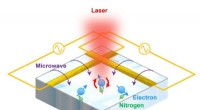
In the field of quantum computing, the ability to switch qubits is crucial for performing computations. One promising method for achieving this is through the use of terahertz (THz) radiation. Terahertz waves are electromagnetic waves with frequencies in the range of 0.1 to 10 THz, and they have several unique properties that make them well-suited for qubit control.
How does it work?
1. Selective excitation: Terahertz waves can selectively excite specific energy levels within the qubits, allowing for targeted manipulation of their quantum states.
2. Coherent control: Terahertz radiation can induce coherent transitions between different qubit levels, enabling precise control over the quantum states of the qubits.
3. Fast switching: Terahertz waves have very short wavelengths and high frequencies, allowing for rapid switching of qubit states on the order of picoseconds or even femtoseconds.
4. Low dissipation: Terahertz waves have low energy compared to other forms of radiation such as X-rays or gamma rays, minimizing the risk of decoherence and preserving the quantum states of the qubits.
Challenges
Despite its potential, utilizing terahertz radiation for qubit control also presents several challenges:
1. Generation: Generating coherent and intense THz radiation with sufficient power is a complex and technically demanding task.
2. Material interactions: The interaction of THz waves with materials can be complex and challenging to control, potentially affecting the fidelity of qubit operations.
3. Scalability: Scaling up terahertz-based qubit control to large-scale quantum systems may be challenging due to the limited power and efficiency of current THz sources.
Prospects
Ongoing research and advancements in THz technology hold promise for addressing these challenges and unlocking the full potential of terahertz radiation for qubit control. As THz sources become more powerful, efficient, and widely available, they may play an increasingly important role in enabling scalable quantum computing systems.