Classical probability, as it is sometimes referred to, operates based on the laws of probability and does not require the underlying theory of quantum physics to explain its rules and principles.
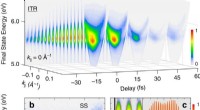
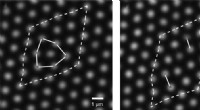
In contrast, quantum physics, which emerged much later, introduces inherent probabilistic behavior at the subatomic level. In quantum mechanics, probability plays a central role in describing the behavior and properties of particles and systems at very small scales. The wave function of quantum particles, for instance, represents their probability distribution within a certain spatial region.
In quantum mechanics, the wave function, which is the mathematical description of a quantum state, evolves in time according to the Schrödinger equation. The wave function provides information about the probabilities of the possible outcomes of measurements.
While quantum theory significantly contributes to our understanding of probability at the quantum level and provides a probabilistic description of quantum phenomena, it does not constitute the origin of probability. Probability theory has its roots in classical probability, which has its origins in the fields of mathematics and philosophy long before the advent of quantum physics.