Albert Einstein was one of the most influential physicists of the 20th century, and his contributions to the field of physics are immeasurable. However, Einstein was also a skeptic of quantum mechanics, a theory that describes the behavior of matter and energy at the atomic and subatomic levels. Einstein's skepticism stemmed from his belief in realism, which is the idea that reality is independent of our observations. He argued that quantum mechanics was incomplete because it did not provide a complete description of physical reality.
Einstein's Arguments Against Quantum Mechanics
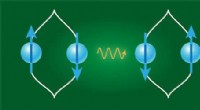
Einstein made several arguments against quantum mechanics. One of his most famous arguments was the Einstein-Podolsky-Rosen (EPR) paradox, which he developed with Boris Podolsky and Nathan Rosen in 1935. The EPR paradox challenged the principle of locality, which states that no information can travel faster than the speed of light. According to the EPR paradox, two particles that are entangled can instantly affect each other even if they are separated by a large distance. This would violate the principle of locality.
Einstein also argued against quantum mechanics because it does not provide a deterministic explanation of physical phenomena. Determinism is the idea that the present state of a system completely determines its future state. Quantum mechanics, on the other hand, is probabilistic, meaning that it can only predict the probability of a system being in a certain state. Einstein believed that this was a fundamental flaw in quantum mechanics.
Would Einstein Have Converted to Quantum Mechanics Today?
It is impossible to say for sure whether Einstein would have converted to quantum mechanics if he were alive today. However, there are some reasons to believe that he might have. First, quantum mechanics has been incredibly successful in explaining a wide range of physical phenomena, including the behavior of atoms, molecules, and subatomic particles. Second, many of the problems that Einstein had with quantum mechanics have been addressed by advances in the field. For example, the EPR paradox has been explained by Bell's theorem, which shows that quantum mechanics does not violate the principle of locality.
Of course, it is also possible that Einstein would have remained skeptical of quantum mechanics even if he were alive today. He was a brilliant physicist, but he was also a stubborn one. He was not afraid to challenge the status quo, and he was not always willing to accept new ideas. It is likely that Einstein would have continued to debate the foundations of quantum mechanics until the day he died.
Einstein's Legacy
Einstein's skepticism of quantum mechanics has had a profound impact on the field of physics. It has led to a deeper understanding of the theory and has helped to identify some of its limitations. Einstein's work has also inspired other physicists to explore new ideas and to challenge the status quo. His legacy is one of creativity, curiosity, and a deep commitment to understanding the physical world.