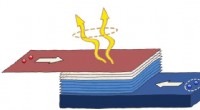
One approach to reducing turbulence is known as "magnetic shear." By carefully shaping the magnetic fields within the tokamak, specifically increasing the magnetic field gradient in the plasma periphery, it is possible to suppress turbulence and improve plasma stability. This can be achieved by optimizing the plasma shape and applying tailored magnetic field configurations.
Another technique involves injecting impurities or noble gas species into the plasma. By introducing these external elements in controlled amounts, it is possible to modify the characteristics of the plasma turbulence and reduce its intensity. This approach, known as "impurity seeding," has shown effectiveness in mitigating edge-localized modes (ELMs), which are bursts of turbulence at the plasma edge that can lead to significant heat and particle losses.
Suppression of plasma turbulence can also be achieved by modulating the plasma rotation. By injecting neutral beams or employing tailored heating and current drive methods, it is possible to induce plasma rotation and shear flows. These flows help to stabilize the plasma and suppress turbulence, leading to improved plasma confinement and performance.
In addition to these techniques, research is also being conducted on real-time control methods. By utilizing advanced diagnostics and control systems, researchers can actively monitor and adjust plasma parameters to mitigate turbulence and optimize plasma stability. This involves fast and precise control of various actuators, such as magnetic fields, heating, and current drive, based on real-time measurements of plasma behavior.
By combining these methods and advancing our understanding of plasma dynamics and turbulence, scientists and engineers are continuously working towards improving the performance of fusion plasmas and unlocking their potential for future energy production.