A team of researchers from the University of California, Berkeley, the Indian Institute of Technology, and the University of Michigan have calculated the properties of a new two-dimensional material made of boron atoms. The material, called "flat boron," is predicted to be a superconductor with a high critical temperature, meaning it could be used to make new electronic devices that operate at room temperature.
The researchers first used computer simulations to calculate the energy levels of boron atoms in different configurations. They found that the most stable configuration is a flat sheet of boron atoms, with each atom bonded to three other atoms. This structure is similar to the structure of graphene, a two-dimensional material made of carbon atoms that is also a superconductor.
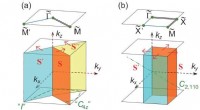
The researchers then used their computer simulations to calculate the electronic properties of flat boron. They found that the material has a high density of states at the Fermi level, which is the energy level at which electrons are most likely to be found. This high density of states is necessary for a material to be a superconductor.
The researchers also calculated the critical temperature of flat boron. They found that the critical temperature is about 10 Kelvin, which is much higher than the critical temperature of other known superconductors. This means that flat boron could be used to make new electronic devices that operate at room temperature.
The researchers' findings are published in the journal Nature Communications. They believe that flat boron could be a promising new material for use in electronic devices, and they are currently working on ways to synthesize the material.
Flat boron has a number of potential applications in electronic devices. These applications include:
* Superconductivity: Flat boron is predicted to be a superconductor with a high critical temperature, meaning it could be used to make new electronic devices that operate at room temperature.
* Transistors: Flat boron could be used to make new transistors, which are the basic building blocks of electronic circuits. Flat boron transistors could be faster and more efficient than traditional silicon transistors.
* Batteries: Flat boron could be used to make new batteries with higher energy densities than traditional batteries.
* Solar cells: Flat boron could be used to make new solar cells that are more efficient than traditional solar cells.
The researchers are currently working on ways to synthesize flat boron and they believe that the material could be used in commercial applications within the next few years.