Piezoelectric materials possess the remarkable property of converting mechanical energy into electrical energy and vice versa. This unique behavior is attributed to the intrinsic alignment of their constituent atoms. For years, researchers believed that the atomic structure of these materials exhibited a highly organized and periodic arrangement, much like a neatly arranged lattice of atoms. However, recent advancements in imaging techniques and theoretical models have revealed a different reality.
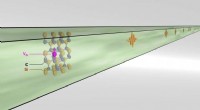
At the nanoscale, the atomic structure of ultrasound materials is far more complex and dynamic than previously thought. Instead of a rigid, precisely aligned lattice, scientists have discovered that the atomic arrangement exhibits a certain level of disorder and fluctuation. This dynamic nature challenges traditional models and sheds light on the extraordinary properties of these materials.
One key finding is the presence of atomic defects, such as vacancies, interstitials, and grain boundaries. These defects disrupt the perfect periodicity of the crystal lattice and contribute to the material's unique piezoelectric properties. Additionally, the atomic vibrations within these materials exhibit intricate patterns and couplings that influence their electromechanical response.
Furthermore, external factors like temperature, mechanical stress, and electrical fields can significantly impact the atomic structure and behavior of ultrasound materials. This responsiveness highlights the interconnectedness of their atomic arrangements and macroscopic properties, enabling the precise tuning of materials for specific applications.
The newfound understanding of the atomic structure of ultrasound materials opens up exciting possibilities for optimizing and designing these materials with enhanced properties. By manipulating atomic-scale features, scientists can potentially improve efficiency, sensitivity, and durability, leading to advancements in various technological fields.
In conclusion, the atomic structure of ultrasound materials is not what scientists expected, revealing a dynamic and complex arrangement that deviates from traditional models. This discovery not only deepens our understanding of the fundamental behavior of these materials but also paves the way for innovative developments and applications in fields ranging from healthcare to aerospace engineering.