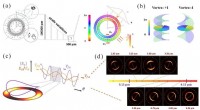
One example of the moiré effect is the formation of superlattices in semiconductors. When two semiconductor layers with slightly different lattice constants are grown on top of each other, the resulting moiré pattern can lead to the formation of new electronic states that are not present in either of the individual layers. These new states can have unique properties, such as enhanced conductivity or magnetism, which can be exploited for various technological applications.
Another example of the moiré effect is the formation of wrinkles in graphene. When graphene is placed on a substrate with a slightly different lattice constant, the moiré pattern can cause the graphene to wrinkle. These wrinkles can lead to changes in the electronic properties of graphene, such as increased resistance or the emergence of new bandgaps.
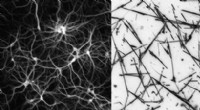
The moiré effect has also been observed in other materials, such as metals, polymers, and even biological systems. In each case, the moiré pattern can lead to the emergence of new properties that are not present in the original materials.
The moiré effect is a powerful tool for manipulating the properties of materials. By understanding the underlying physics of the moiré effect, scientists can design materials with tailored properties for specific applications.