The Building Blocks: Capsomers and Their Interactions
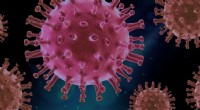
The capsid of a spherical virus is composed of numerous protein subunits called capsomers. These capsomers come together to form closed shells through specific interactions between them. These interactions are driven by forces such as Van der Waals forces, hydrogen bonding, hydrophobic forces, and electrostatic interactions. The strength and nature of these interactions determine the overall shape and stability of the viral capsid.
The Role of Symmetry: Icosahedral and Helical Symmetry
One striking aspect of spherical viruses is their near-perfect icosahedral symmetry. An icosahedron is a polyhedron with 20 identical equilateral triangular faces, 30 edges, and 12 vertices. This specific arrangement allows for maximum stability and efficient packaging of capsomers within the smallest possible volume.
However, not all spherical viruses exhibit perfect icosahedral symmetry. Some viruses adopt variations such as quasi-icosahedral symmetry, in which the triangles are slightly distorted or irregular, or helical symmetry, where the capsomers are arranged in a spiral pattern. The type of symmetry is determined by the number and arrangement of capsomers and the specific interactions between them.
Self-Assembly: Spontaneous and Hierarchical Processes
The self-assembly of spherical viruses is a remarkable process that involves the spontaneous organization of capsomers into the final viral structure. This process can be divided into two main stages: the initial nucleation and the subsequent growth of the capsid.
During nucleation, a small cluster of capsomers comes together to form a stable nucleus. This nucleus then serves as a template for further capsomer addition, leading to the growth of the capsid. The process is guided by the specific interactions between the capsomers, ensuring the formation of the correct icosahedral or helical symmetry.
Dynamic Nature and Adaptability
While spherical viruses display a highly organized and stable structure, they also exhibit a certain degree of flexibility. Some viruses can undergo conformational changes, such as expansion and contraction, to adapt to different environments or stages of their life cycle. This dynamic nature allows them to interact with host cells and evade immune responses more effectively.
In summary, the physics underlying the formation of spherical viruses involve the self-assembly of capsomers driven by specific interactions and guided by the principles of symmetry. The resulting icosahedral or helical structures provide stability, efficient packaging of genetic material, and adaptability, enabling these viruses to infect a diverse range of hosts and thrive in various environments.