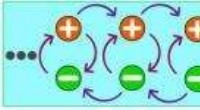
Reduced dimensionality: Atomically thin layers have a reduced dimensionality compared to their bulk counterparts. In three-dimensional materials, the magnetic properties are influenced by interactions between atoms throughout the bulk. When the material is thinned down to two dimensions, these interactions are altered, leading to changes in the magnetic behavior.
Quantum confinement: The confinement of electrons in atomically thin layers results in quantum mechanical effects that can modify the magnetic properties. Quantum confinement can lead to discrete energy levels, enhanced spin-orbit coupling, and modified exchange interactions, all of which can influence the magnetic behavior.
Surface effects: Atomically thin layers have a significantly larger surface area-to-volume ratio compared to bulk materials. This increased surface area can lead to enhanced interactions with the environment, such as adsorption of gases or other materials, which can influence the magnetic properties. Surface defects and impurities can also play a significant role in the magnetic behavior of atomically thin layers.
Strain effects: When atomically thin layers are deposited on substrates or encapsulated in heterostructures, they can experience strain due to lattice mismatch or other mechanical constraints. This strain can alter the electronic structure and magnetic interactions, leading to changes in the magnetic properties.
Magnetic anisotropy: The magnetic anisotropy, which describes the preferred direction of magnetization, can be different in atomically thin layers compared to bulk materials. In bulk materials, the magnetic anisotropy is often determined by the crystal structure and interactions between neighboring atoms. In atomically thin layers, the reduced dimensionality and quantum confinement effects can modify the magnetic anisotropy, leading to different easy axes of magnetization.
These factors collectively contribute to the differences in magnetism observed between atomically thin layers and their bulk forms. The study of magnetism in atomically thin layers is an active area of research, with potential implications for spintronics, data storage, and other magnetic technologies.