1. Formulate a precise question:
Start by formulating a specific question or hypothesis about quantum mechanics that you want to test. This question should address a specific aspect of quantum theory, such as the wave-particle duality of matter, the behaviour of entangled particles, or the predictions of quantum superposition.
2. Design an experiment or observation:
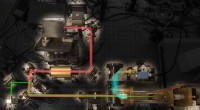
Design an experiment or observation that can potentially provide evidence for or against the hypothesis. The experiment should be carefully planned to control for external factors and minimize experimental errors. This may involve using advanced experimental techniques, such as cooled atom systems, quantum optical setups, superconducting circuits, or specialized measurement devices.
3. Conduct the experiment:
Carry out the experiment and collect experimental data. Ensure that the experimental procedure is well-documented and that all necessary controls and calibrations are performed. This step may require collaboration with experimental physicists and access to specialized equipment and facilities.
4. Analyse the results:
Analyse the experimental data to extract meaningful information and draw conclusions. This may involve statistical analysis, numerical simulations, or theoretical modelling to interpret the results and compare them with the predictions of quantum mechanics.
5. Evaluate and interpret the findings:
Evaluate whether the experimental results support or refute the hypothesis under investigation. Consider potential sources of error or alternative explanations for the observed phenomena. This step involves careful scientific reasoning and may lead to new insights or modifications to existing quantum theories.
6. Develop theoretical models:
Develop theoretical models that can explain or predict the experimental results. This may involve extending or modifying existing quantum theories, proposing new mathematical frameworks, or exploring alternative interpretations of quantum mechanics.
7. Refine and repeat experiments:
Refine the experiment based on the initial findings and repeat it to further test the hypothesis and gather more data. This iterative process helps to increase confidence in the results and rule out alternative explanations.
8. Communicate and collaborate:
Publish the experimental results and theoretical models in scientific journals or conferences. Engage in scientific discussions and collaborations with other researchers to validate and scrutinize the findings. Peer review and scientific discourse are crucial for advancing our understanding of quantum mechanics.
9. Explore implications and applications:
Consider the implications of the experimental findings for our understanding of fundamental physics, technology, and other fields. Explore potential applications or connections to other areas of research, such as quantum computing, quantum information, cosmology, or condensed matter physics.
Testing the limits of quantum mechanics is a challenging but rewarding endeavour that pushes the boundaries of our scientific knowledge. It involves a combination of experimental ingenuity, theoretical rigour, and open-mindedness to explore new possibilities and revise existing paradigms in our quest to understand the fundamental nature of reality.