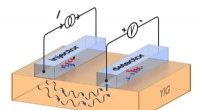
Parametric amplification is a process in which the amplitude of a signal is increased by modulating the capacitance or inductance of a circuit. This can be done by applying a second signal, called the pump signal, to the circuit. The pump signal causes the capacitance or inductance to vary, which in turn causes the amplitude of the first signal to increase.
The amount of amplification that can be achieved depends on the strength of the pump signal. However, if the pump signal is too strong, it can cause the circuit to become unstable. This is because the variation in capacitance or inductance can cause the signal to become distorted.
In their study, the Berkeley physicists showed that it is possible to overcome this problem by using a technique called phase-locked loop (PLL) synchronization. PLL synchronization is a method of ensuring that two signals have the same frequency and phase. By using PLL synchronization, the researchers were able to keep the pump signal and the input signal in phase, which prevented the circuit from becoming unstable.
The researchers also showed that their technique can be used to multiply frequencies by a large factor. In their experiments, they were able to multiply frequencies by a factor of 10. This means that a signal with a frequency of 1 GHz could be converted into a signal with a frequency of 10 GHz.
The researchers believe that their technique could be used to improve the performance of a wide variety of electronic devices. For example, it could be used to increase the sensitivity of cell phone receivers, improve the resolution of television images, and enhance the range of radar systems.
The study was published in the journal Nature Communications.