Isotope Analysis: Lasers can be used for precise isotope analysis of nuclear materials. By measuring the specific isotopes present in a sample, such as uranium-235 and uranium-238, it's possible to determine the origin and potential use of the material. Laser-based isotope analysis techniques include Laser-Induced Breakdown Spectroscopy (LIBS) and Resonance Ionization Mass Spectrometry (RIMS).
Material Identification: Lasers can be employed for the rapid identification of nuclear materials. Laser-Induced Fluorescence (LIF) is a technique that utilizes the interaction of laser light with specific elements or molecules to induce fluorescence. By detecting and analyzing the emitted fluorescence, the presence of certain nuclear materials can be identified.
Remote Sensing: Laser remote sensing techniques allow for the detection and characterization of nuclear materials from a distance. Laser-based remote sensing systems can be mounted on satellites, drones, or mobile platforms to monitor large areas and detect potential nuclear activities. Techniques such as Differential Absorption Lidar (DIAL) and Laser-Induced Breakdown Spectroscopy (LIBS) are used for remote sensing of nuclear materials.
Uranium Enrichment Monitoring: Lasers are essential for monitoring uranium enrichment levels, a crucial aspect of nuclear nonproliferation. Laser-based techniques like Atomic Vapor Laser Isotope Separation (AVLIS) and Molecular Laser Isotope Separation (MLIS) can be used to separate uranium isotopes, allowing for the precise measurement of uranium enrichment.
Safeguards and Inspections: Lasers are valuable tools for safeguards and inspections conducted by international organizations to ensure compliance with nuclear nonproliferation agreements. Laser-based systems can be used for non-destructive analysis of nuclear materials, environmental sampling, and verification of nuclear facilities.
Compact and Portable Systems: Advances in laser technology have enabled the development of compact and portable laser systems. These systems can be easily deployed to remote locations, enabling on-site monitoring and analysis of nuclear materials.
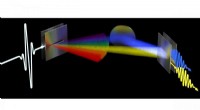
Time-Resolved Spectroscopy: Laser-based time-resolved spectroscopy techniques can provide valuable information about the dynamics and interactions of nuclear materials. By measuring the time-dependent behavior of laser-induced emissions, it's possible to gain insights into the chemical and physical properties of nuclear materials.
In summary, lasers contribute to nuclear nonproliferation monitoring by providing precise and efficient methods for isotope analysis, material identification, remote sensing, uranium enrichment monitoring, safeguards and inspections, and time-resolved spectroscopy. These techniques offer valuable capabilities for detecting, analyzing, and characterizing nuclear materials, thus supporting efforts to prevent the spread of nuclear weapons and ensure global security.