Wind Tunnel Testing:
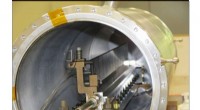
Wind tunnels are ground facilities designed to simulate the airflow conditions encountered by the capsule during supersonic atmospheric entry. Scale models or replicas of the capsule are mounted in the test section of the wind tunnel, and high-pressure air or other gases are forced through the tunnel at supersonic velocities. This testing provides valuable data on the capsule's aerodynamic characteristics, such as drag, lift, and stability, under realistic flow conditions.
Computational Fluid Dynamics (CFD) Simulation:
CFD is a powerful tool for analyzing fluid flows numerically using computational methods. Scientists can create virtual models of the capsule and simulate its supersonic entry into the Martian atmosphere. By solving complex mathematical equations, CFD helps predict the capsule's trajectory, pressure distribution, heat transfer, and other parameters associated with supersonic flight. CFD simulations complement wind tunnel testing and provide additional insights into the capsule's behavior.
Flight Test with Sounding Rockets:
Sounding rockets are single-stage rockets that can carry payloads to high altitudes, offering a platform for flight tests under near-space conditions. Scientists may use sounding rockets to test sub-scale prototypes or components of the entry capsule. These flight tests provide real-world data on capsule's supersonic dynamic characteristics, including its aerodynamic performance, thermal response, and control systems. Flight test data validates the predictions from wind tunnel testing and CFD simulations.
Drop Tests with High-Altitude Balloons:
High-altitude balloons can lift payloads to stratospheric altitudes, providing opportunities for drop tests. Sub-scale models of the capsule are equipped with sensors and released from the balloons at specific heights. During the descent, the models encounter supersonic airflow conditions similar to those experienced during Mars entry. Drop tests provide valuable information on the capsule's dynamic behavior, parachute deployment, and overall systems performance.
Thermal Testing:
The Tianwen-1 Mars Entry Capsule faces extremely high temperatures during supersonic entry due to the intense friction with the atmosphere. Scientists conduct thermal testing to evaluate the capsule's ability to withstand these extreme conditions. Heat flux facilities, arc jet wind tunnels, and other specialized setups are used to simulate the thermal environment of Mars entry and assess the capsule's thermal protection materials and structures.
Through a combination of wind tunnel testing, CFD simulations, flight tests, drop tests, and thermal testing, scientists thoroughly evaluate the supersonic dynamic characteristics of the Tianwen-1 Mars Entry Capsule. This rigorous testing process helps to mitigate risks and ensures that the capsule is capable of safely navigating the challenges of supersonic atmospheric entry during its mission to Mars.