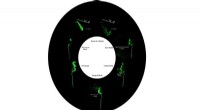
The explosion of a QGP fireball is a complex process that is not yet fully understood. However, several mechanisms are thought to be involved.
One mechanism is called the "fragmentation" process. In this process, the quarks and gluons in the fireball recombine to form hadrons. This can happen either through the direct combination of quarks and gluons or through the formation of intermediate states, such as strings or clusters.
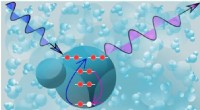
Another mechanism is called the "hadronization" process. In this process, the quarks and gluons in the fireball convert directly into hadrons. This can happen through a process called "Schwinger pair production," in which a quark and an antiquark are created from the vacuum.
The explosion of a QGP fireball is also thought to be influenced by the properties of the fireball itself, such as its temperature, density, and size. For example, the higher the temperature of the fireball, the more energetic the hadrons that are produced.
The explosion of QGP fireballs is an important process in the study of the strong force and the early universe. By studying these fireballs, scientists can learn more about the properties of the strong force and how it behaves in extreme conditions.
Here is a simplified explanation of the process:
1. In a high-energy heavy-ion collision, the nuclei of the ions collide with each other at extremely high speeds. This collision creates a large amount of energy, which is converted into heat and pressure.
2. The heat and pressure cause the nuclei to melt, and the quarks and gluons inside the nuclei are freed from their confinement. This creates a QGP fireball, which is a tiny drop of matter that is extremely hot and dense.
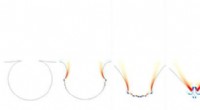
3. The QGP fireball is unstable and quickly explodes into a shower of hadrons. This explosion is caused by the quarks and gluons in the fireball recombining to form hadrons.
4. The hadrons that are produced in the explosion can be detected by particle detectors. By studying these hadrons, scientists can learn more about the properties of the QGP fireball and the strong force.