A team of scientists at the University of California, Berkeley, has made a breakthrough in understanding how short pulses of light can destroy particles. The research, published in the journal Nature Photonics, could lead to new ways to destroy cancer cells, kill bacteria, and even create new materials.
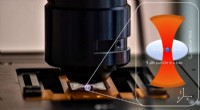
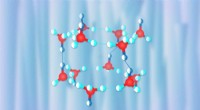
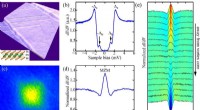
The researchers used a technique called ultrafast laser spectroscopy to study how short pulses of light interact with matter. They found that when a short pulse of light hits a particle, it can cause the particle to vibrate so violently that it breaks apart.
The researchers say that this new understanding of how short pulses of light destroy particles could lead to a number of important applications. For example, it could be used to develop new treatments for cancer and other diseases. It could also be used to create new materials, such as stronger metals and more efficient semiconductors.
The researchers are excited about the potential of their research, and they are eager to continue exploring the ways in which short pulses of light can be used to destroy particles.
How does it work?
When a short pulse of light hits a particle, it causes the particle to vibrate very quickly. This vibration can be so violent that it causes the particle to break apart. The researchers found that the shorter the pulse of light, the more violent the vibration and the more likely the particle is to break apart.
What are the potential applications?
The potential applications of this research are numerous. For example, it could be used to develop new treatments for cancer and other diseases. By targeting specific particles within cancer cells, it may be possible to kill the cells without harming the surrounding healthy tissue. This could lead to more effective and less toxic cancer treatments.
The research could also be used to create new materials. By controlling the way in which particles break apart, it may be possible to create new materials with specific properties. For example, it may be possible to create stronger metals or more efficient semiconductors.
The researchers are excited about the potential of their research, and they are eager to continue exploring the ways in which short pulses of light can be used to destroy particles.