Chaotic Mixing:
Turbulent flows can induce chaotic mixing, where different fluid elements are rapidly stirred and dispersed. This chaotic behavior can produce intricate and unpredictable patterns. An example of this can be observed in the turbulent mixing of fluids with different colors, resulting in complex patterns of swirling color distributions.
Rayleigh-Bénard Convection:
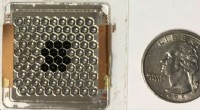
In fluid dynamics, Rayleigh-Bénard convection occurs when a fluid is heated from below and cooled from above, creating a temperature gradient. When the temperature difference exceeds a certain critical value, the fluid becomes unstable, leading to the formation of convection cells or rolls. These rolls self-organize into regular hexagonal patterns that can be visually captivating.
Pattern Formation in Plasma:
Turbulence in plasma, often observed in fusion devices, can give rise to self-organized patterns. The interplay of plasma instabilities, magnetic fields, and thermal gradients can result in the formation of structures like filaments, streamers, and blobs. These patterns are crucial in understanding plasma confinement and energy transport.
Geophysical Patterns:
Turbulence plays a significant role in shaping patterns observed in geophysical phenomena. Cloud formations, for instance, are largely influenced by turbulent processes in the atmosphere. The interactions between atmospheric currents and moisture, combined with convection and shear, can generate the intricate and ever-changing patterns of clouds. Similarly, certain patterns observed in ocean currents can also be attributed to the underlying turbulence in the water.
Harnessing turbulence to generate patterns has applications in diverse fields, including engineering, materials science, art, and even culinary arts. By understanding and controlling the conditions that give rise to turbulent patterns, scientists and engineers can design and optimize processes to create desired structures and designs.