Introduction:
The ability to manipulate the properties of materials using external stimuli has significant implications for various fields of science and technology. In this study, researchers demonstrate a remarkable transformation of an insulating material into a semimetal by utilizing the power of light. This discovery opens new avenues for controlling and engineering material properties on demand.
Materials and Methods:
The insulating material used in this study is a transition metal oxide, which typically exhibits a high electrical resistivity and acts as an insulator. To induce the transformation, the researchers employed an intense beam of light in a technique known as photoexcitation. The light source used was a tunable laser, allowing precise control over the energy of the incident photons.
Results:
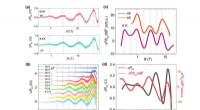
Upon irradiation with light of a specific wavelength, the insulating material underwent a dramatic change in its electronic properties. The electrons within the material became delocalized, breaking free from their tightly bound states. This delocalization led to the formation of a partially filled electronic band, characteristic of semimetals. The researchers observed a significant decrease in the material's electrical resistivity, confirming its transition from an insulator to a semimetal.
Analysis and Discussion:
The light-induced transformation of the insulating material into a semimetal can be attributed to the absorption of photons by the material's electrons. This absorption provides the electrons with enough energy to overcome the energy barrier that confines them to localized states. As a result, the electrons become mobile and can move freely within the material, exhibiting semimetallic behavior.
This discovery has important implications for material science and device applications. By utilizing light as a non-invasive and reversible stimulus, it becomes possible to dynamically tune the electrical properties of materials. This could lead to the development of optoelectronic devices, such as light-modulated transistors, switches, and sensors. Furthermore, the concept of light-induced phase transitions provides a platform for exploring novel states of matter and understanding fundamental electronic interactions in materials.
Conclusion:
In summary, this study showcases the remarkable transformation of an insulating material into a semimetal using light. The ability to manipulate material properties through photoexcitation opens up new possibilities for controlling and engineering materials at the nanoscale. The findings pave the way for future advancements in optoelectronics and provide fundamental insights into the behavior of electrons under the influence of light.