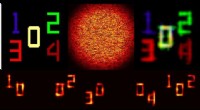
STM involves scanning a sharp tip over the surface of a material to create a three-dimensional image of the surface. The tip is so sharp that it can detect individual atoms, and the resulting images can be used to determine the arrangement of atoms on the surface.
The STM images of ice revealed that the surface of ice is not as smooth as it appears to the naked eye. Instead, it is covered in tiny bumps and ridges, which are caused by the way the water molecules are arranged.
When water molecules freeze, they form a crystalline structure, with the molecules arranged in a regular pattern. However, the structure of ice is not perfect, and there are often defects in the crystal lattice. These defects create tiny bumps and ridges on the surface of the ice, which can make it feel slippery.
The slipperiness of ice is also affected by the way that water molecules interact with the surface. When water molecules come into contact with ice, they can form a thin layer of liquid water on the surface. This layer of water can act as a lubricant, reducing the friction between the ice and other objects.
The findings of this study provide a better understanding of the atomic-level structure of ice and how it contributes to the slipperiness of ice. This knowledge could lead to the development of new materials that are more resistant to slipping or that have other desired properties.
In addition to its implications for understanding the slipperiness of ice, this study also provides a new tool for studying the structure of other materials at the atomic level. STM can be used to image the surface of a wide variety of materials, and the results can be used to understand their properties and behavior.