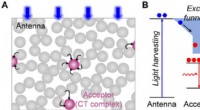
However, indirect excitation methods using visible lasers have been proposed and demonstrated to excite nuclear levels in certain isotopes, including thorium-229. One technique involves a two-step excitation process:
1. Resonant Excitation to Intermediate Level: A visible laser is used to excite a long-lived intermediate level in thorium-229. This can be achieved by carefully choosing a laser wavelength that matches the energy difference between the ground state and the intermediate excited state.
2. Subsequent Internal Conversion: After populating the intermediate level, internal conversion takes place, where the excitation energy is transferred to an electron in the atomic shell. This process results in the emission of an internal conversion electron and the simultaneous excitation of the nucleus to its first excited state.
By combining these steps, it becomes possible to excite the first nuclear transition in thorium-229 using lasers in the visible wavelength range. However, the efficiency of this process is typically low, and achieving significant excitation requires careful optimization of laser parameters and experimental conditions.
Despite these challenges, research in this area continues, and advancements in laser technology and excitation techniques hold promise for improving the efficiency and applicability of such indirect excitation methods for studying nuclear properties and manipulating nuclear energy levels.